
“Great things are not done by impulse, but by a series of small things brought together.” — Vincent van Gogh
The Seven Kaizen Principles at a Glance
- Small Improvements: Make small, consistent changes that create lasting results.
- Eliminate Waste: Remove unnecessary activities, delays and duplication.
- Standardise Your Routine: Establish effective habits and repeatable procedures.
- Focus on the Process: Improve the methods that lead to successful outcomes.
- Continuous Learning: Remain curious, acquire knowledge and develop new skills.
- Find the Root Cause: Understand the real problem before implementing solutions.
- Never Stop Improving: Make improvement a lifelong habit and commitment.
Kaizen is a Japanese philosophy of continuous improvement that emphasises making small, consistent and meaningful changes in everyday activities. The word Kaizen is derived from two Japanese words: Kai, meaning change, and Zen, meaning good. Together, they represent the idea of change for the better.
The philosophy of Kaizen teaches us that improvement does not always require dramatic transformations, extraordinary efforts or expensive resources. Sometimes, the smallest changes, when practised consistently, can produce remarkable results over time.
Originally popularised in Japanese industries and management systems, Kaizen has evolved into a universal approach to personal development, education, leadership,
workplace efficiency and organisational excellence.
Whether you are a student striving for academic excellence, a teacher aspiring to improve classroom effectiveness or a professional seeking greater productivity, these seven Kaizen principles can help you develop a mindset of lifelong improvement.

1. Small Improvements: Little changes, big results

The foundation of Kaizen lies in the belief that small improvements, when repeated consistently, lead to significant long-term transformation.
People often postpone improvement because they believe that change must be substantial to make a difference. Kaizen challenges this assumption. Instead of attempting to change everything at once, identify one small area that can be improved every day.
For instance, studying for an additional 15 minutes daily, improving one teaching strategy every week or making a small improvement in workplace communication can gradually produce remarkable outcomes.
Practical application:
For Students: Improve handwriting, reading speed, concentration or problem-solving ability through regular, manageable practice.
For Teachers: Introduce one innovative teaching strategy, improve classroom questioning or provide more constructive feedback.
For Professionals: Improve one work process, communication practice or administrative procedure at a time.
The secret is consistency rather than intensity. A small improvement repeated regularly becomes a powerful habit.
Remember: Don’t wait for a perfect opportunity to make a big change. Start with a small improvement today.
2. Eliminate Waste: Remove what adds no value
Kaizen emphasises identifying and eliminating activities that consume time, energy, resources and effort without adding meaningful value.
In Japanese management philosophy, waste is often described by the term Muda. It includes unnecessary movement, waiting, duplication, excessive inventory, avoidable transportation, over-processing and activities that do not contribute to the desired outcome.
Waste is not limited to physical resources. Unproductive meetings, repetitive paperwork, unnecessary interruptions, poor communication and inefficient routines are also forms of waste.
Practical application:
For Students: Avoid unnecessary distractions, unproductive screen time, last-minute preparation and repeatedly postponing assignments.
For Teachers: Reduce duplication in documentation, minimise avoidable classroom interruptions and organise teaching resources efficiently.
For Professionals: Simplify procedures, avoid unnecessary meetings, reduce repetitive work and improve coordination between departments.
Ask yourself three questions:
What can be simplified or eliminated?
What am I doing that does not add value?
How can I achieve the same result with less time and effort?
Remember: Productivity is not about doing more; it is about eliminating what does not matter.
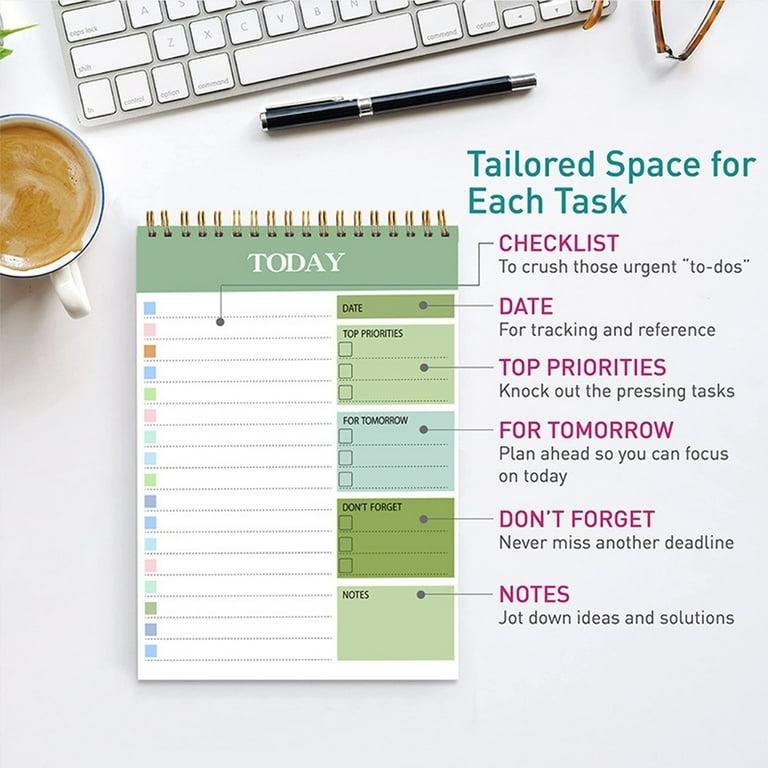
3. Standardise Your Routine: Consistency creates excellence

Continuous improvement becomes sustainable when effective practices are converted into regular routines and standard procedures.
Kaizen encourages people and organisations to establish clear, consistent and repeatable methods of performing tasks. Standardisation reduces confusion, prevents avoidable errors
and ensures that good practices are maintained.
However, standardisation does not mean rigidity. It provides a reliable foundation from which further improvements can be introduced.
Practical application:
For Students: Develop a consistent timetable for studying, revising, completing assignments and preparing for examinations.
For Teachers: Follow systematic lesson-planning formats, assessment procedures, classroom routines and student feedback mechanisms.
For Professionals: Establish standard operating procedures (SOPs), reporting formats, communication protocols and workflow systems.
For example, a teacher may adopt a standard lesson-planning sequence: learning objectives, introduction, teaching-learning activities, assessment and reflection. Once established, this routine can be reviewed and improved continuously.
Remember: What is done consistently becomes a habit; what is done systematically becomes a standard.
4. Focus on the Process: Improve the journey, not just the outcome
Many people focus exclusively on results—marks, rankings, targets, promotions or achievements. Kaizen encourages us to pay equal, if not greater, attention to the processes that produce those results.
A good result achieved through an inefficient process may not be sustainable. Conversely, an effective process, practised consistently, is more likely to produce reliable and lasting outcomes.
Instead of asking only, “Did I succeed?”, ask, “How effectively did I work towards success?”
Practical application:
For Students: Focus on understanding concepts, regular revision, disciplined practice and effective study techniques rather than marks alone.
For Teachers: Evaluate not only examination results but also teaching methodologies, student engagement, learning outcomes and classroom interactions.
For Professionals: Examine the quality of planning, teamwork, communication, decision-making and execution rather than concentrating exclusively on final targets.
An effective process-oriented approach involves observing performance, identifying gaps, experimenting with better methods and reviewing the outcomes.
Remember: Excellence is not an accidental achievement; it is the outcome of an effectiveand continuously refined process.

5. Continuous Learning: Stay curious, stay relevant

Kaizen recognises that improvement is impossible without learning. Knowledge, technology, expectations and professional requirements continue to evolve. Therefore, individuals and organisations must remain open to new ideas, experiences and perspectives.
Learning should not be restricted to formal education, workshops or training programmes. It can emerge from everyday experiences, mistakes, discussions, observations, reading and constructive feedback.
A person who stops learning eventually risks becoming stagnant.
Practical application:
For Students: Develop curiosity, read beyond textbooks, ask questions, explore new ideas and learn from mistakes.
For Teachers: Participate in professional development programmes, explore innovative pedagogies, integrate technology and learn from colleagues and students.
For Professionals: Upgrade technical skills, develop leadership competencies, embrace new technologies and remain informed about developments in their fields.
Cultivate a growth mindset—the belief that abilities can be developed through dedication, practice and appropriate guidance.
Remember: Your qualifications may open doors, but continuous learning keeps thosedoors open.